

When I first started out, I thought being a business analyst meant writing requirements documents and creating process flowcharts. I imagined long days spent in meetings, gathering notes, and translating business jargon into technical speak. But after years in the trenches, I have realized the truth. The job is rarely that straightforward.
In reality, the best business analysts are not just note-takers or documentation experts. We are corporate detectives. We are data investigators.
Our real job is to find the truth hidden within the chaos. We follow trails of information, uncover hidden problems, and piece together the real story behind why a process is failing or a project is stalling. Today, I want to pull back the curtain and show you why thinking like a detective is the secret weapon of a successful business analyst.
The Scene of the Crime: Understanding the Business Problem

Every new project starts like a crime scene. A stakeholder comes to you with a problem. They might say, “Our sales are down this quarter,” or “The new software is too slow.” This is the initial report. But any good detective knows that the first report is rarely the whole story.
As a business analyst, your first task is to secure the scene. This means asking questions, a lot of them. You need to understand the context. Who is involved? What is the impact? How long has this been happening?
This phase is about gathering initial evidence. We use tools like stakeholder interviews and observation to understand the environment. We look for clues in the existing documentation, but we do not take anything at face value. A common mistake junior analysts make is accepting the stakeholder’s problem statement without investigating further. A seasoned business analyst knows that the reported problem is often just a symptom of a deeper, hidden issue.
Gathering Evidence: The Role of Data Investigation
Once we understand the reported problem, the real data investigation begins. This is where we roll up our sleeves and dig into the details.
We cannot rely on opinions or assumptions. We need hard facts. This involves looking at systems data, user feedback, and performance metrics. We analyze process flows to identify bottlenecks. We review error logs to find technical glitches.
The Tools of the Trade
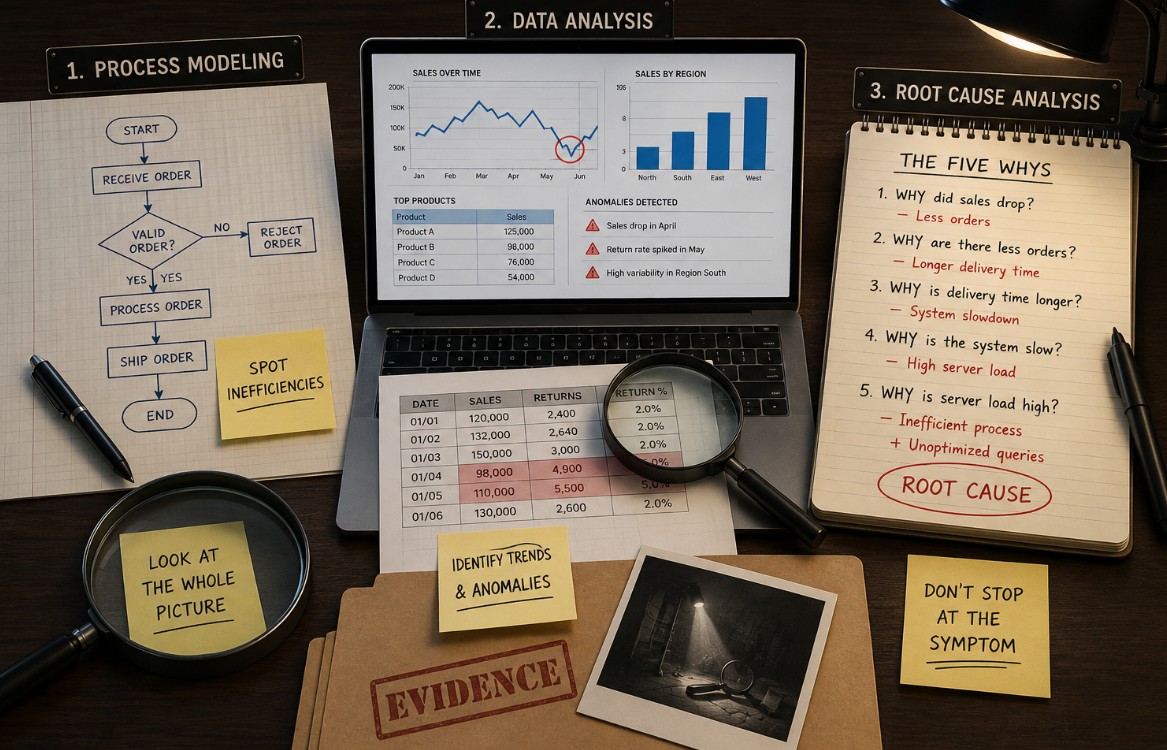
Just like a detective uses fingerprint dusting and DNA analysis, a business analyst uses specific tools to gather evidence. These include:
- Process Modeling: Creating visual representations of how work gets done to spot inefficiencies.
- Data Analysis: Looking at spreadsheets and databases to identify trends and anomalies.
- Root Cause Analysis: Using techniques like the “Five Whys” to dig past symptoms and find the underlying cause.
During this data gathering phase, it is crucial to remain objective. We must follow the evidence wherever it leads, even if it contradicts what the stakeholders initially believed. This is often the most challenging part of the job, as it requires balancing tact with the pursuit of the truth.
Interviewing Suspects: The Art of Stakeholder Communication
A detective cannot solve a case without talking to witnesses and suspects. Similarly, a business analyst cannot solve a business problem without effective stakeholder communication.
However, interviewing stakeholders is not just about asking a list of questions. It is an art form. You have to read between the lines. Often, what a stakeholder does not say is just as important as what they do say.
You need to ask probing questions to uncover hidden agendas or unspoken constraints. Sometimes, people are hesitant to share the full truth because they fear blame or change. As a business analyst, you must build trust and create an environment where people feel comfortable sharing their true insights. This requires strong active listening skills and empathy.
Connecting the Dots: Analyzing the Findings
After gathering all the evidence and interviewing the stakeholders, you are left with a massive pile of information. The next step is the most critical: connecting the dots.
This is where the analytical mind truly shines. You must synthesize the data, identify patterns, and draw logical conclusions. You are piecing together a puzzle, often with missing pieces.
This phase is what separates a good business analyst from a great one. A great analyst can take complex, disparate information and weave it into a coherent narrative. They can see the big picture while still understanding the intricate details. They identify the true root cause of the problem, which is often far removed from the initial symptom reported at the start of the project.
Presenting the Case: Creating the Business Solution

A detective’s job is not done until they present their findings to a judge or jury. For a business analyst, presenting the case means sharing your findings and recommending a solution to the stakeholders.
This is where your communication skills are tested again. You must translate your complex data investigation into a clear, compelling story that stakeholders can understand and support. You need to present the evidence logically and demonstrate why your proposed solution is the best way forward.
This involves creating clear documentation, such as business requirement documents (BRDs) or user stories, but it also requires persuasive presentation skills. You must convince the business leaders that your investigation is sound and your recommendations will solve their problem.
Why This Mindset Matters Now More Than Ever
The business world is becoming increasingly complex. Organizations are dealing with more data, faster technological changes, and higher customer expectations than ever before. In this environment, surface-level analysis is no longer enough.
Companies need professionals who can dig deep, ask the tough questions, and uncover the real issues holding them back. They need data investigators.
If you are looking to advance your career or build a solid foundation in this field, adopting this investigative mindset is crucial. It changes how you approach problems and how you deliver value to an organization. For those wanting to develop these specific skills and learn the tools of the trade, exploring comprehensive training programs is a smart move. You can find excellent resources and structured learning paths through a dedicated Business analyst course which can help you master the techniques needed to succeed.
Conclusion: Embrace Your Inner Detective

Being a business analyst is a challenging but incredibly rewarding career. It requires a unique blend of analytical thinking, communication skills, and sheer curiosity.
If you want to excel in this role, stop thinking of yourself as just a document creator or a meeting facilitator. Embrace your inner detective. Approach every project with a healthy dose of skepticism. Follow the data, ask the difficult questions, and never stop digging until you find the truth.
The best business analysts know that the real answers are rarely on the surface. They are hidden in the data, waiting for a skilled investigator to uncover them. So, grab your metaphorical magnifying glass and start investigating. The business world needs more detectives.