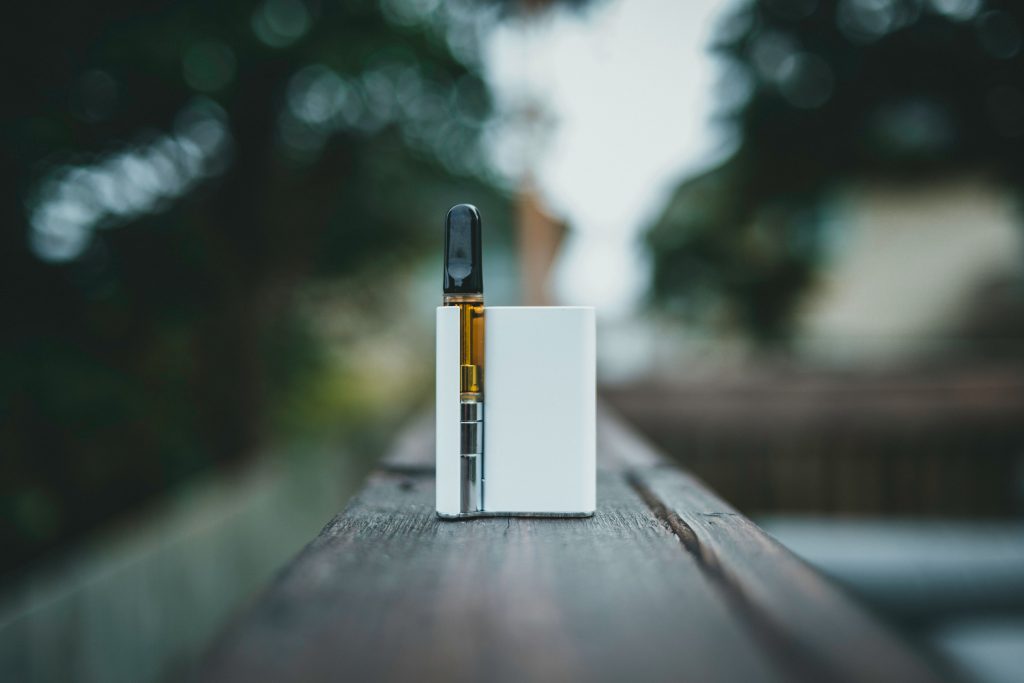
There is a specific disappointment that every cannabis vaper recognizes. A brand-new cartridge or disposable, first pull: dense, flavorful, exactly what the price promised. Then, sometimes within the same session, the cloud thins to a whisper. By the third day you’re drawing warm air, tilting the device, running a preheat cycle, and quietly wondering whether you bought a dud.
Here is the position I’ve landed on after reading how these products are actually engineered – atomizer patents, manufacturer spec sheets, dispensary complaint threads, and the guides the industry writes for itself: a weak hit is rarely your fault, and more often than not it isn’t the oil’s fault either. It is a mismatch between a very thick, heat-sensitive material and hardware designed around a thinner one. That distinction matters, because the two problems demand opposite fixes. Treat weak vapor as user error and you’ll switch brands and relive the disappointment. Treat it as a hardware problem – in what you buy, or in what you’re building – and it mostly stops happening.
Vapor production is a three-variable system, and every pull is a negotiation between its parts. You need enough heat to vaporize the oil, fast enough oil delivery to feed that heat, and enough airflow to carry the result to your mouth. Skimp on any one of those and the other two cannot compensate. That single fact explains why weak vapor wears so many disguises – why one device chugs along for two hundred hits while another fades by hit ten, and why two cartridges of identical potency can perform nothing alike.

Anatomy of a weak hit
A thin hit is a symptom, not a diagnosis. The table below maps the most common complaints to what is actually happening inside the device – and to whose design choices are responsible.
| What you notice | What is usually happening | Where the fix lives |
|---|---|---|
| First few hits are great, then the vapor thins out across a session | The heating core is outrunning its oil supply – wicking cannot keep pace with your draw | Atomizer design plus oil-to-hardware matching |
| Weak from the very first hit, at any setting | Power too low for the coil’s resistance, or battery output sagging | Regulated power and voltage design |
| Weak, with a tight draw and occasional gurgling | Condensation or oil is restricting the airway | Airflow geometry and intake design |
| Produces vapor only at the maximum setting, then tastes burnt | Hardware was spec’d for thinner oil and is being over-driven to compensate | Matched hardware, chosen for the actual extract |
| Strong on a full charge, weak as the battery drains | Output falls as voltage drops in an unregulated battery | Constant-voltage board / stable power delivery |
The patterns above are synthesized from current troubleshooting guides, including West Coast Cure’s explainer on how 510 cartridges work (June 2026), CannabisDealsUS’s component breakdown (April 2026), and a technical thread on the Future4200 forum (May 2026). Notice what is missing from the list: “weak oil.” Cartridges returned for weakness routinely test fine for potency. When a cart “stops hitting,” the extract is rarely the problem – the delivery system is. Clogging and weak vapor are two ends of the same failure: an atomizer that cannot keep up with the oil sitting above it.
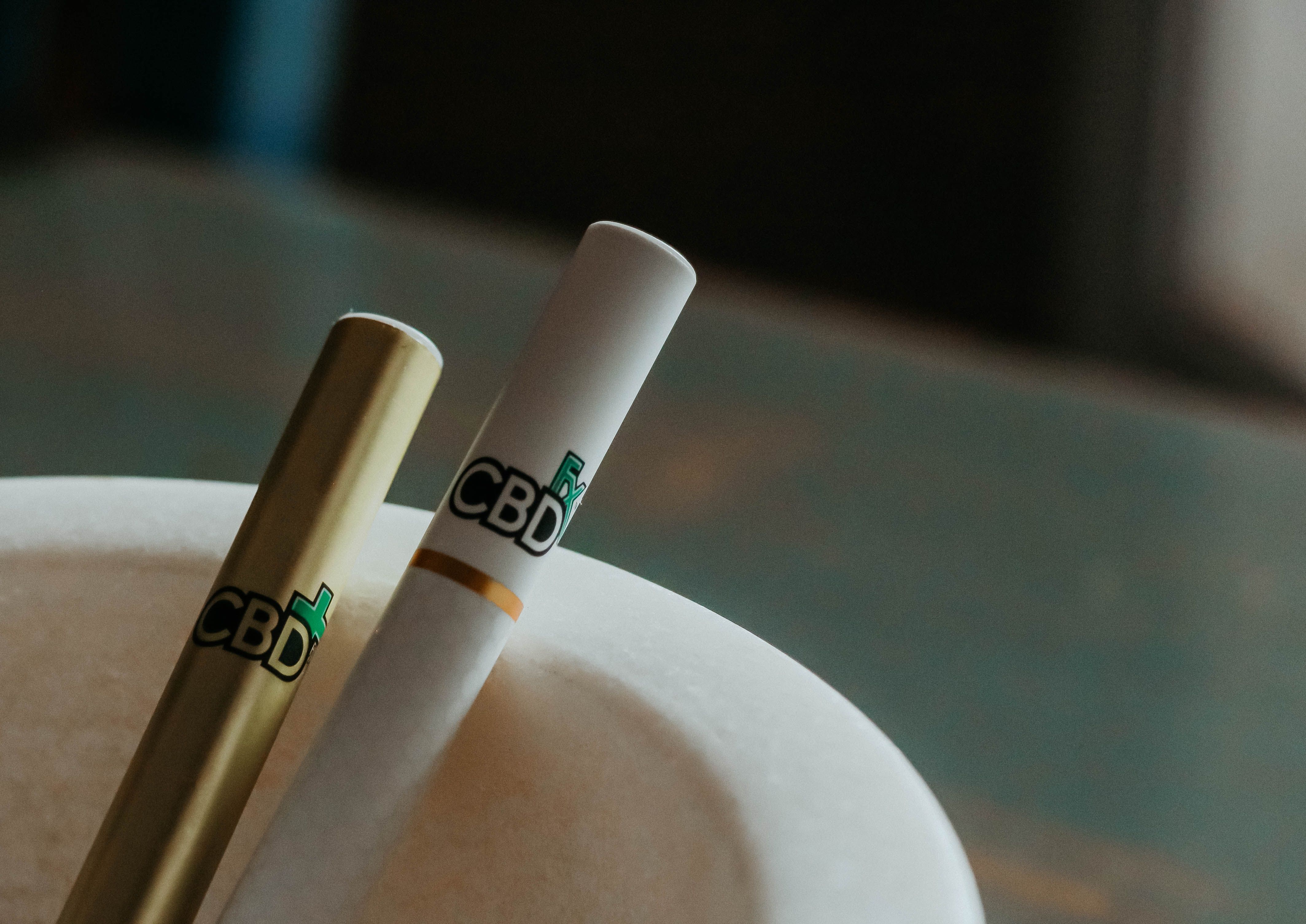
That is the core tension of the classic 510 cartridge. The oil inside it is one specific formulation, yet the device gets screwed onto any battery in the world, at whatever voltage the user happens to own. The cartridge is expected to behave identically across all of them. That expectation is part of the problem.
The material nobody blames: viscosity
Start with what’s in the tank, because it is the variable people understand least. Cannabis extracts are not e-liquid. Nicotine juice is thin, water-like, and forgiving – it wicks easily and vaporizes at low heat. Cannabis oil is closer to cold honey, and live resin and rosin are thicker still. A porous ceramic core has to physically pull that material upward against gravity, fast enough to keep pace with your inhale.
Viscosity is set partly by the extract and partly by the recipe. Terpenes thin oil, which is why terp-heavy live resins flow more readily than stripped distillate, while cannabinoid concentration thickens it. That creates an uncomfortable truth for brands chasing ever-higher potency figures: the more concentrated the oil, the thicker it runs, and the harder the hardware must work to move it. High-THC distillate lines that push into the low-to-mid-90s percent range only work because the extraction is tuned so the oil can actually travel through the core it’s paired with. Strip the terpenes back and keep the potency number high, and the oil turns to syrup that starves the coil.
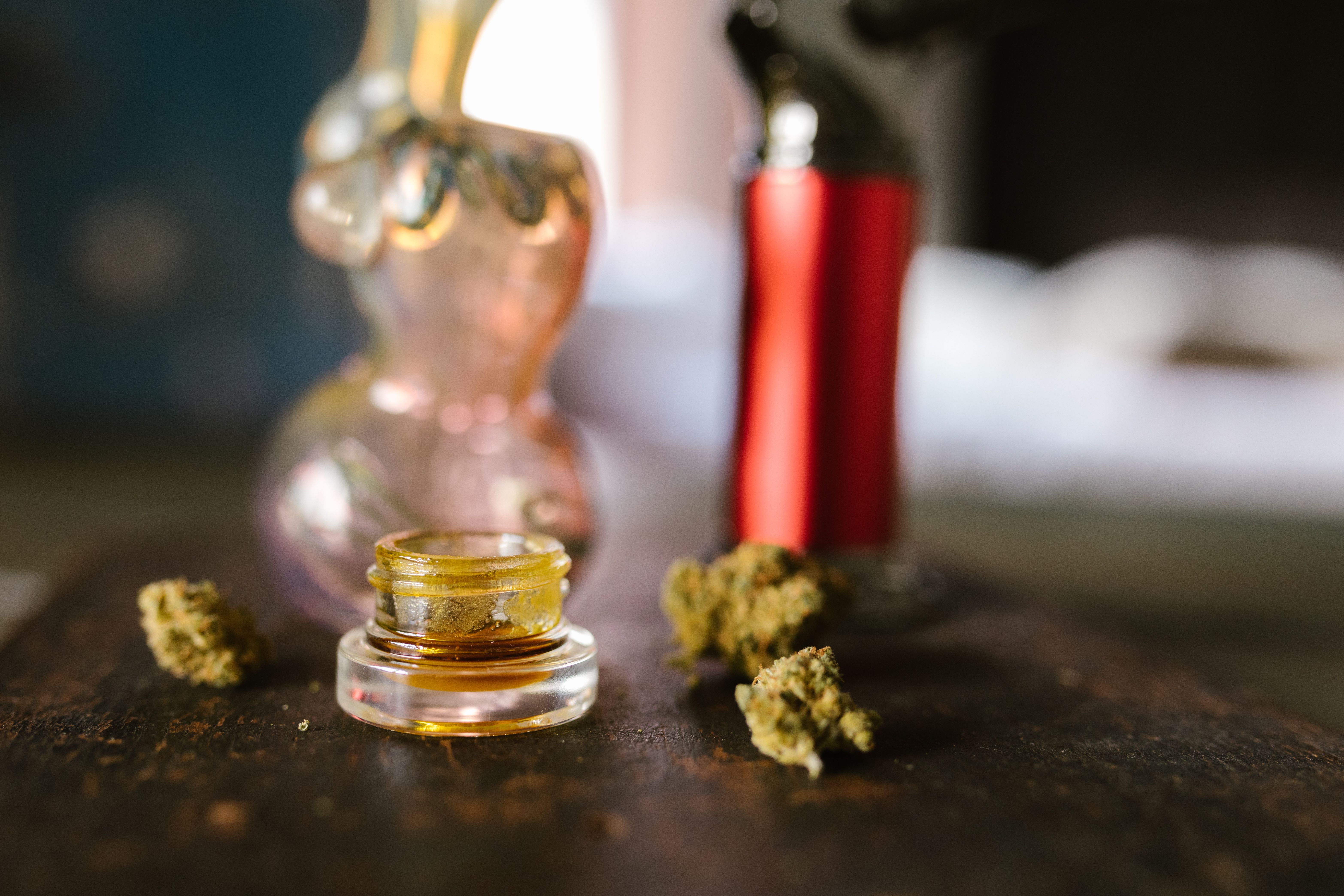
Temperature makes everything worse. Below about 20°C (68°F), cannabis oil thickens noticeably, and the first pull of a cold cartridge is the classic weak hit – while the cold simultaneously saps battery output, so the two failures arrive together. This is why the same cartridge can hit beautifully indoors and weakly on a patio in winter. It’s physics, not product quality.
Inside the atomizer: why supply beats heat
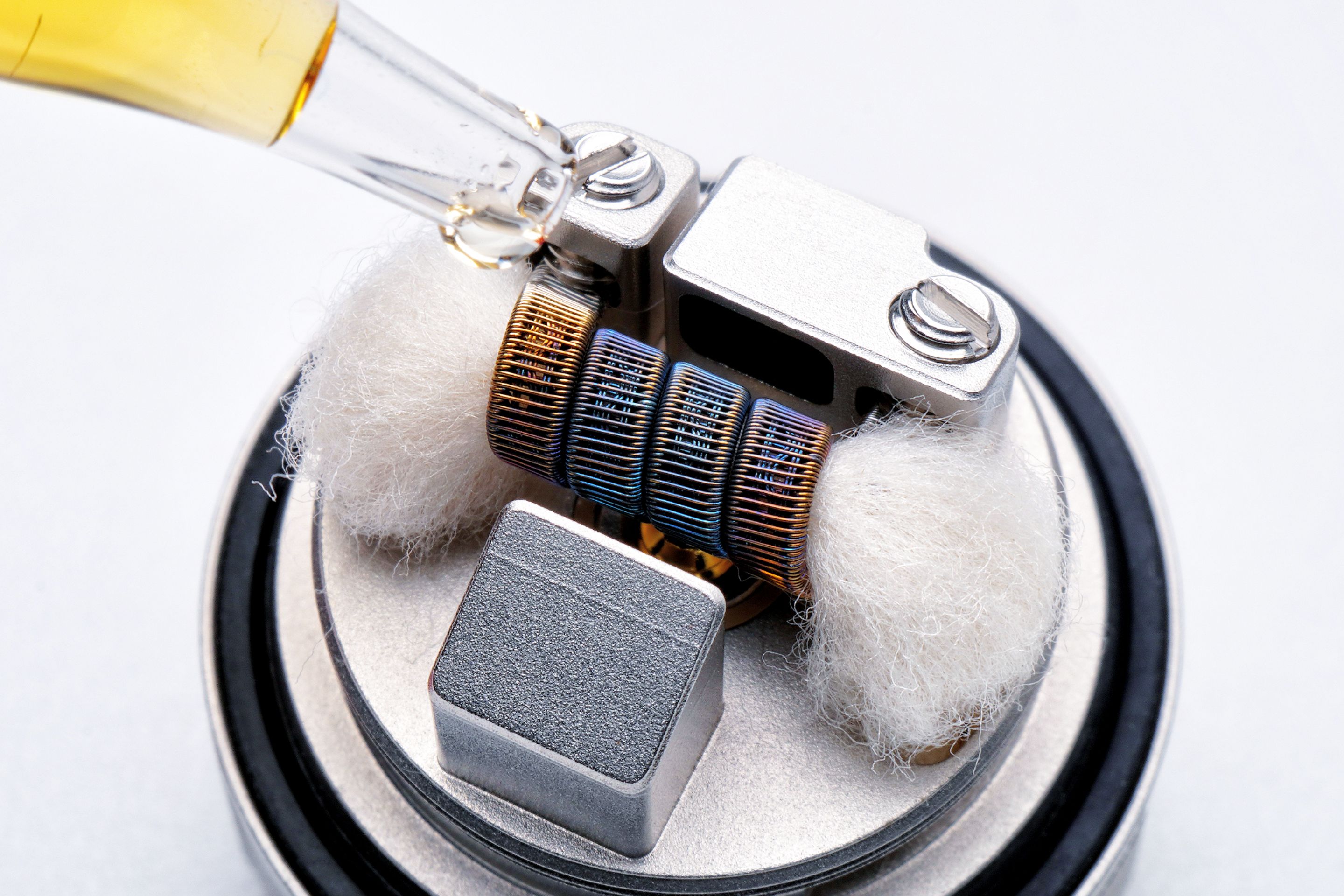
The atomizer is where design quality shows up first, and I would argue where most weak-vapor problems are actually born. Early hardware used cotton wicks, which char quickly when oil supply runs short – and each charred hit draws oil slower than the last, a descending spiral that ends in a dead cart. Porous ceramic was developed partly to escape that failure mode. Its microscopic pores feed oil by capillary action to a heating element, and the ceramic’s porosity is held to a deliberately narrow band: too low and the oil starves the heater, too high and the tank floods. Tuning that band for a specific oil is real engineering, not commodity manufacturing.
The heating element itself is the second variable. A small heating surface concentrated in one spot cooks oil unevenly – char in the hot zone, under-vaporized oil in the cool zone. Newer ceramic cores spread heat across a larger, more uniform atomizing surface, which is exactly why “weak vapor” and “burnt taste” so often appear in the same product. Both are symptoms of heat that isn’t distributed the way a given oil needs it. Watch a primed coil under a macro lens and you’re seeing the whole argument: the craft is in how evenly and reliably that surface delivers heat, not in how hot it can get.
Airflow: the geometry nobody sees
The third variable is the least visible and the most fixable. Air enters through intake holes at the base of the cart, passes the heater, picks up vapor, and travels up a center airway to the mouthpiece. Every angle and diameter change along that route shapes the hit. A single narrow intake creates a strong directional pull that drags oil toward the airway, where vapor condenses back into liquid on cooler walls, migrates downward, and eventually blocks the channel. That is the classic “clogged overnight” cartridge – it clogged from sitting still and from geometry, not from heavy use.
Hardware makers have quietly answered this by making the intake part of the specification. CCELL, whose cartridges fill a large share of dispensary shelves, manufactures its intake holes in five diameters from 1.2 mm to 2.0 mm precisely for this reason: thicker oil needs a wider mouth to flow through, thinner oil needs a narrower one or it rushes the atomizer and floods it. There is no universally correct cartridge – only a cartridge that is correct for a given oil.
Yet most of the market still treats that as an afterthought. A California concentrate maker put it bluntly in a public postmortem on why its own cartridges don’t clog, writing that the industry has “basically priced clogging in as a normal feature of the product.” The single-intake, cotton-wick, lowest-cost build is the default, and the customer absorbs the failure by buying another cart. That’s a business decision masquerading as a design one, and it is worth keeping in mind the next time a “bad cart” costs you an evening.
Batteries: the quiet third failure
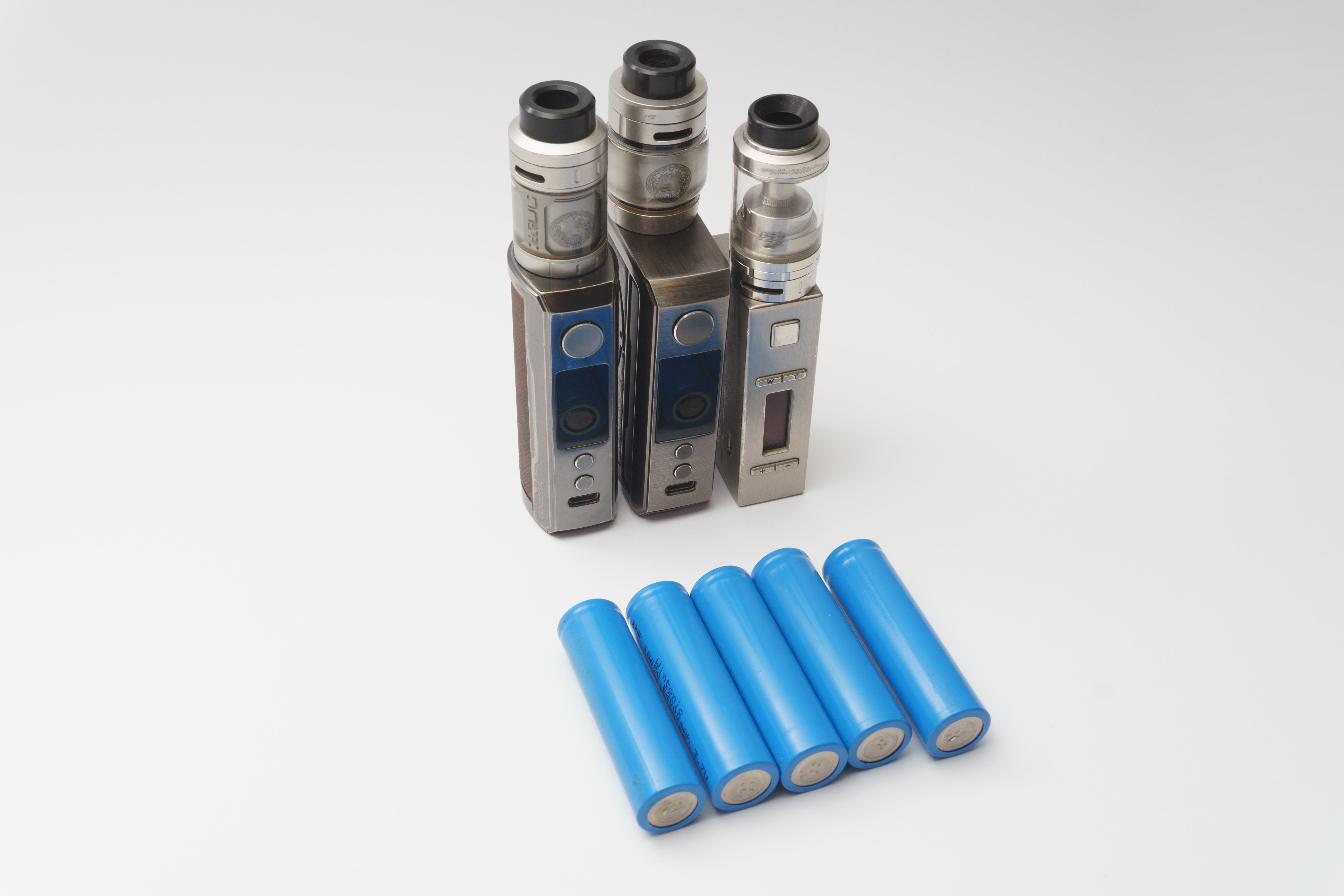
Everyone blames the cartridge; almost nobody blames the battery. Yet power delivery is half the equation, and the math is unforgiving: the wattage actually reaching the coil equals voltage squared divided by resistance. Typical prefilled cannabis carts run ceramic cores between roughly 1.25 and 2.0 ohms, per Vaping360’s guide to voltage and wattage for THC carts – which means the same 3.0 volts produces meaningfully more heat in a 1.2-ohm cart than in a 2.0-ohm one. Resistance and oil thickness are supposed to be considered together, and in most consumer setups they never are.
My read after comparing guides is that more weak-hit complaints trace to sagging, unstable battery output than to anything inside the cartridge. In an unregulated pen, delivered voltage falls as the battery drains, so the coil runs cooler and cooler until the “hit” becomes a puff of warm air. Cheaper boards also fluctuate, over-driving the coil on early puffs and under-delivering afterward – the hot-then-weak cycle so many users describe without ever naming the cause.
| Typical range | What it produces | Where it goes wrong | Best matched to |
|---|---|---|---|
| Around 2.0–2.8 V | Cool, clean, terpene-forward vapor | Thick oils barely produce; the hit can feel anemic | Live rosin, live resin, and terp-heavy extracts |
| Around 2.8–3.3 V | Fuller vapor and faster effect delivery | Flavor fades and oil darkens if held too long | Distillate and most prefilled carts |
| Above roughly 3.3 V | Dense, hot clouds | Burnt taste, harsh throat hit, faster oil degradation | Only cores engineered for sustained high power – the exception, not the rule |
The bands above are compiled from Vaping360’s THC cart guidance (May 2023) and 2026 guides from West Coast Cure, Eden Goods, and hardware maker ASM VAPE, checked in September 2026. Treat them as working ranges, not laws: the right setting always depends on the oil’s thickness and the coil’s resistance. What the table is really telling you is that cranking voltage is a blunt instrument. Above the design window, more power stops producing more vapor and starts producing burnt oil.
The fix is systems engineering
Put all of that together and the pattern is obvious. Weak vapor is rarely one bad part; it is the seams between parts – an atomizer spec’d for one kind of oil, a battery that sags, airflow geometry that condenses vapor back into a blockage. The devices that dodge the problem are engineered as a system rather than assembled from a catalog. For a 510 user, that means matching your battery’s voltage range to the cart’s resistance and your oil’s thickness. For a brand, it means specifying the core, intake, and power together against the actual formulation that will fill the device.
That system-level thinking is exactly why the center of gravity in cannabis hardware has moved toward all-in-one disposables, where the battery, tank, and atomizer are sealed into a single package designed as a unit instead of three components that meet in the middle. Flip through any serious hardware maker’s lineup and you’ll see the shift. ASM VAPE, for instance, describes its AIO Vape Hardware in terms of matched systems – postless unicore ceramic cores for rosin, constant-voltage battery cells so output doesn’t sag, corrosion-resistant tank materials for cannabis oils – rather than a pile of interchangeable parts. That kind of matching is what separates a device that hits the same on puff one and puff two hundred from one that peaks early and fades.
What good hardware looks like
- A ceramic core with porosity matched to the oil, not a generic cotton wick. Cotton chars; ceramic is engineered to feed steadily – but cheap ceramic with sloppy porosity fails just as surely.
- Regulated power. Constant-voltage output, a low-voltage cutoff, or genuinely stable voltage settings. Unregulated output is a weak-hit generator.
- Intake geometry chosen for the extract. Correctly sized intake holes for the oil’s thickness, and ideally dual intakes that spread airflow instead of dragging oil toward the airway.
- Claims you can verify. The brands and makers that engineer this properly can usually name their hardware and tell you how it was tested – with the real oil, not a stand-in. Vague “premium build” language is a warning sign.
Giving cheap hardware its due
The counterargument deserves a fair hearing. Hardware cannot repeal physics: a cartridge left in a freezing car overnight will thicken past any core’s design window, and users who pull like a vacuum cleaner, chain-vape, or store devices in hot cars genuinely cause failures on their own. Engineering costs money, too, and the brands that engineered their way out of the problem charge more for it. If a $15 cart with an occasional paperclip ritual is an acceptable trade for you, that is a legitimate choice, not a mistake.
I accept most of that – and it does not change my conclusion. The failure modes above are predictable and engineerable, which is the entire argument that cheap hardware has priced them in rather than solved them. I would not buy any device that only works at maximum settings, and I would not ship one either. Better design will not make weak vapor impossible. It makes it rare. That is a reasonable standard, and it is achievable.
Before you blame yourself, try this
If a cart is already hitting weak, the sequence below resolves most cases short of a genuine hardware defect. It is worth doing in order, because the cheapest fix is the first one.
- Warm it before you hit it. Hold the cartridge in a closed hand for two or three minutes. Body heat is roughly the right amount of energy – a hair dryer or lighter is too much and degrades the oil.
- Start low and draw gently. Around 2.4–2.8 V suits most carts. Take slow, steady three-to-five-second draws. Hard, fast pulls drag air across a starved coil and make everything worse.
- Store it upright, away from temperature swings. A hot car thins oil into leaks; a cold one thickens it into clogs.
- Do not poke it or blow into it. Paperclips puncture seals; blowing pushes oil deeper into the airway. If you must clear it, gentle warmth and patience beat tools every time.
- Never add terpenes or thinning agents to “fix” a clog. You’ll trade a clog for a leak and inhale an unverified additive. This is also why regulators warn against modifying vaping products.
- Buy from licensed sources in legal markets. The 2019–20 EVALI outbreak that killed 68 people in the U.S. was driven almost entirely by unregulated, additive-laced cartridges – hardware choice matters far less than where the oil came from.
Frequently asked questions
Why is my vape producing weak vapor even with a fresh cartridge and a full battery?
The most common cause is that the oil is not reaching the heating element fast enough – it is too thick for the core, too cold, or the power is too low for the coil’s resistance. Warm the cartridge, start at a low voltage, and draw gently. If a brand-new cartridge only produces at the maximum setting, the hardware was mismatched to the oil.
Does higher voltage mean more vapor?
Up to a point, yes – power is voltage squared divided by resistance, so more voltage means more heat. But every coil has a design window. Push past it on a starved or mismatched core and you get burnt taste and degraded oil, not denser clouds. Visible vapor is also not a reliable measure of how much you’re actually inhaling.
Why do hits weaken as the battery drains?
In an unregulated battery, the delivered voltage falls as the charge drops, so the coil runs progressively cooler until the draw is mostly air. Devices with constant-voltage or constant-power regulation hold output steady across the battery’s life, which is why well-designed hardware doesn’t have the fade.
Is ceramic actually better than cotton for cannabis oil?
Generally, yes. Cotton chars when supply runs short, and charred cotton draws oil slower on every subsequent hit. Porous ceramic avoids that failure mode and distributes heat more evenly. But “ceramic” alone is not a guarantee – porosity, heating area, and intake design still have to match the oil, and cheap ceramic can fail just as easily.
Is an all-in-one disposable better than a 510 cartridge on a separate battery?
For consistency, usually yes, for a simple reason: the battery, core, and tank are specified and sealed together at the factory, so the parts can’t be mismatched by the user. A 510 cartridge gives you flexibility – you keep the battery and swap carts – but its performance depends entirely on which battery you attach and what voltage you run. That extra variable is where most weak-vapor problems begin.
How this article was put together
I wrote this for anyone who vapes cannabis and for brands choosing hardware, and based it on manufacturer engineering guides and patent filings, plus published technical guidance from Vaping360 (May 2023), West Coast Cure (June 2026), Eden Goods (August 2026), ASM VAPE (June 2026), and industry deep-dives from Dican’s engineering notes (March 2026) and Halara’s cartridge postmortems (May–August 2026), all checked on 2 September 2026. Return-rate and defect figures published by individual companies are self-reported – no independent, standardized test exists for weak vapor or clogging, so treat them as directional. One link in this article points to ASM VAPE’s all-in-one line, a hardware vendor mentioned as an example of the category. Cannabis vaping is for adults in legal markets only, and nothing here is medical advice.