Anyone who has coached a packed fitness class knows the moment when half the room looks confused. One person missed the station change, someone else forgot the rep count, and beginners are trying to copy movements from across the room. Energy drops fast when people stop to figure out what comes next.
Clear visual guidance changes that completely. Members spend less time guessing and more time moving with confidence. Coaches stop repeating the same instructions every thirty seconds and can focus on motivation, safety, and form correction instead.
Strong visual systems also make classes feel more professional, especially in busy studios where timing and flow matter.
Using Screens Without Making the Class Feel Robotic
Technology can improve a class or completely flatten the energy. The difference comes down to how it supports the coach instead of replacing them.
Many gyms now use systems like Workout TV to display timers, movement demos, station rotations, and coaching cues during classes. When done correctly, screens become a support tool that reduces confusion while allowing coaches to stay engaged with members instead of acting like human stopwatches.
A good setup usually includes:
- Clear movement demonstrations
- Visible timers from every corner of the room
- Short coaching cues instead of paragraphs
- Rotation prompts during circuits
- Scaling options for beginners
Visual instruction works best when it simplifies information instead of adding more noise.
Too many animations, colors, or excessive instructions create overload. Members should understand the screen in one quick glance.
Keeping Classes Moving Without Constant Repetition
One of the most exhausting parts of coaching group fitness is repeating directions. Coaches often explain the same station setup multiple times during a single workout, especially in HIIT or circuit formats.
Visual guidance helps eliminate that cycle.
When participants can see movement demos and timing information, they become more independent. That gives instructors more freedom to coach posture, breathing, pacing, and motivation instead of repeating logistics all class long.
Here’s where visual systems help most:
| Class Situation | How Visual Guidance Helps |
| Station circuits | Members see rotations instantly |
| Interval training | Timers keep everyone synchronized |
| Beginner classes | Demo loops reduce intimidation |
| Mixed skill levels | Scaling options stay visible |
| Large group sessions | Less crowding around the instructor |
The pacing improvement becomes obvious after only a few sessions. Classes start on time more consistently, transitions become cleaner, and members stay focused longer.
That structure also reduces stress for newer instructors who may struggle with crowd management.
Designing Visuals That People Actually Notice
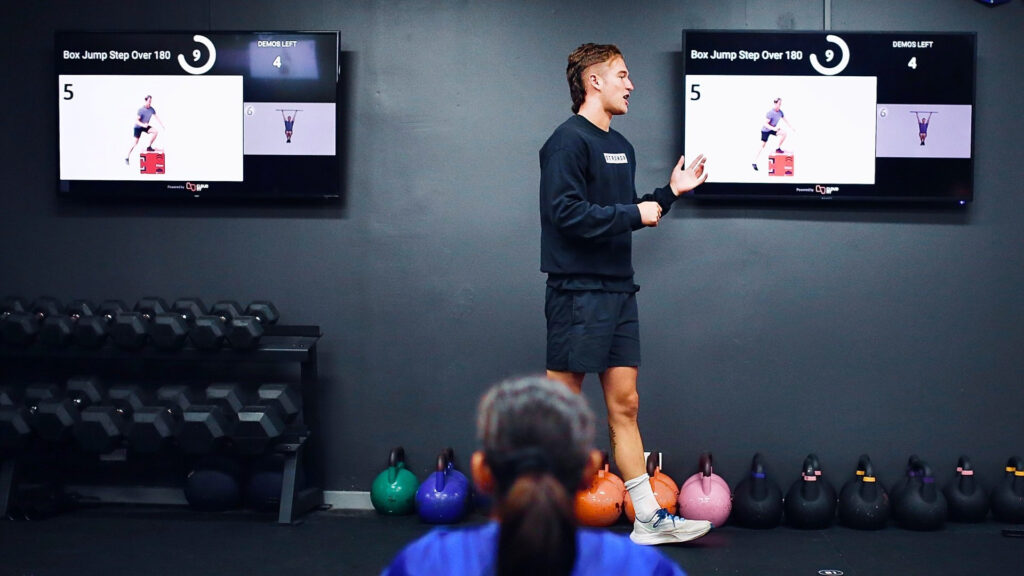
Not every visual cue works equally well. Some screens look impressive but fail in real workout conditions because participants only glance at them for a second or two.
Fitness visuals need to prioritize clarity over design trends.
Studies on exercise cueing have shown that concise visual guidance paired with demonstrations improves movement understanding and exercise execution.
The most effective setups usually follow a few practical rules:
- Large text visible from the back of the room
- Minimal wording on screen
- High contrast colors
- Simple movement loops
- Consistent placement of timers and cues
Did you know?
Many virtual fitness instructors intentionally exaggerate arm positioning and body angles during demonstrations because subtle movements are harder to follow visually on screens.
That same principle works inside physical studios too. Clear and exaggerated demonstrations improve follow along performance significantly.
Helping Beginners Feel Comfortable Faster
Beginners often struggle quietly in group fitness classes. They may avoid asking questions because they do not want to slow the class down or look inexperienced in front of others.
Visual guidance lowers that pressure.
When members can reference screens for movement demos or station flow, they gain confidence without needing constant reassurance. That matters more than many gyms realize because early comfort strongly affects retention.
A beginner friendly class usually feels predictable. Participants know:
- What movement comes next
- How long each interval lasts
- Where to move during rotations
- What scaling options exist
- When rest periods begin
That sense of structure helps reduce mental fatigue. Instead of spending energy trying to decode instructions, members can focus on movement quality and effort.
Many coaches notice that newer members participate more actively once visual support becomes part of the class environment.
Balancing Verbal and Visual Coaching Together
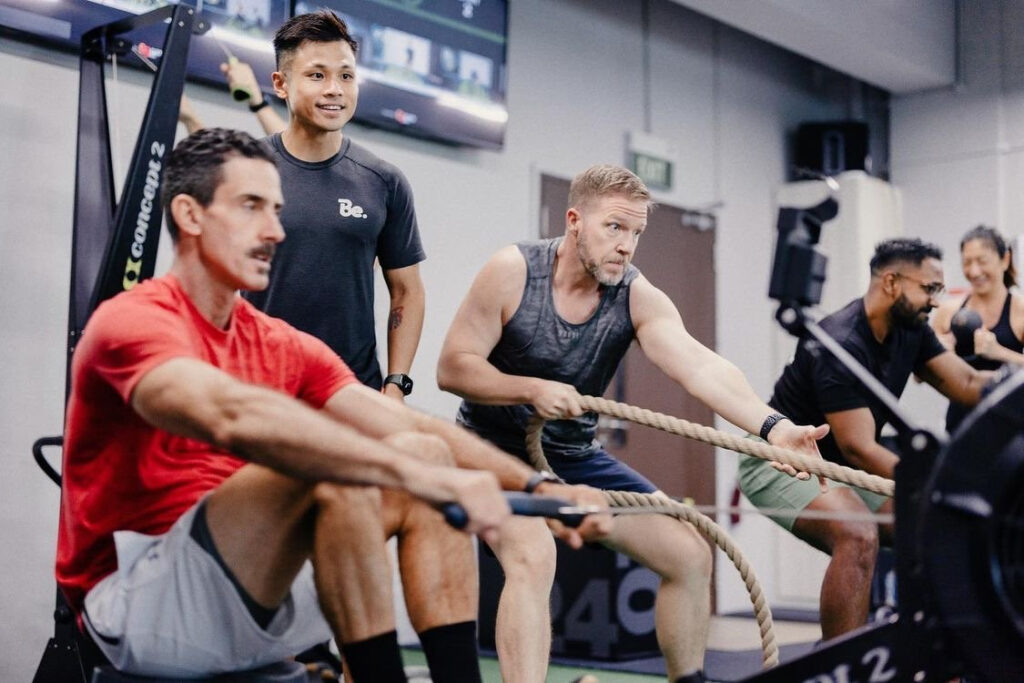
Visual guidance should never replace real coaching. Strong classes still depend on personality, timing, encouragement, and human interaction.
The best instructors combine both systems naturally.
Visual cues handle the logistical side of the workout while verbal coaching adds energy and correction. That balance creates a smoother experience because participants receive information through multiple learning styles at once.
Some members learn visually while others respond better to spoken instruction or physical demonstration. Fitness education research consistently highlights the importance of combining cueing styles to improve participation and understanding.
A strong coaching rhythm often looks like this:
- Screen previews the movement
- Coach demonstrates key form points
- Timer keeps pacing consistent
- Instructor walks the room correcting technique
- Visual transitions guide the next station
That combination feels organized without becoming cold or overly technical.
Creating a More Professional Studio Experience
People notice presentation more than gym owners sometimes expect. A class that flows smoothly feels premium even without expensive equipment or luxury interiors.
Visual organization plays a huge role in that perception.
Clean displays, synchronized timing, and visible workout structure create an experience that feels polished and intentional. Members stop wondering what comes next and start trusting the process more fully.
That professionalism also helps coaches maintain authority without constantly raising their voices over loud music. Participants become more self directed, which improves room control naturally.
Small adjustments often create the biggest difference:
- Better screen placement
- Cleaner station numbering
- Consistent countdown systems
- Easier to read interval layouts
- Simpler movement demonstrations
None of those changes require turning the class into a tech showcase. The goal is simply to remove friction so members stay engaged from warm up to cooldown.
Final Thoughts
Great group fitness classes feel smooth, clear, and easy to follow even when the workout itself is challenging. Visual guidance helps create that experience by reducing confusion, improving pacing, and giving members more confidence throughout the session.
The strongest classes still depend on human coaching, energy, and connection. Visual systems simply remove unnecessary chaos so instructors can focus on what actually matters: helping people move well, stay motivated, and enjoy coming back next week.