
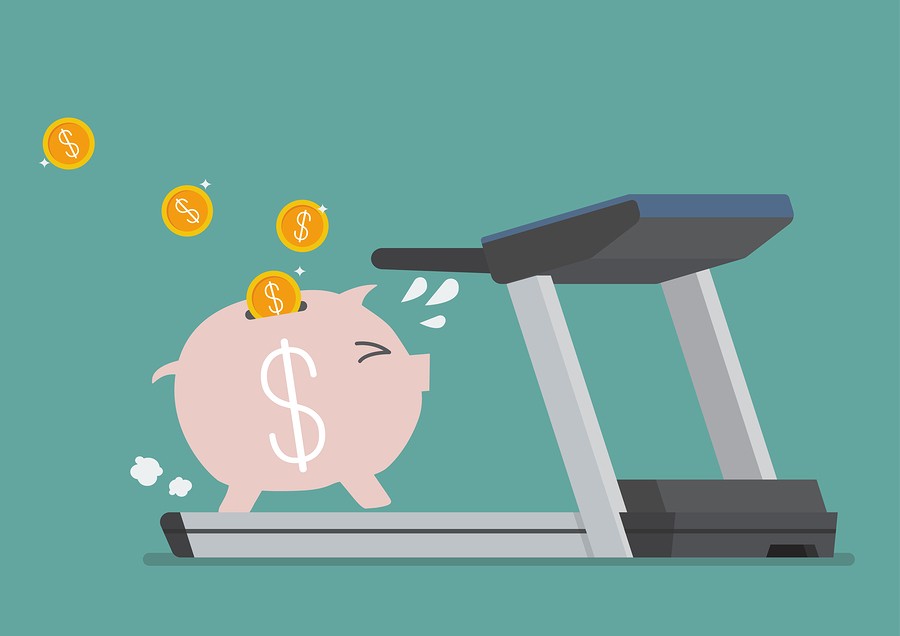
By now, a lot of people who made New Year’s resolutions have already broken their promises to themselves. Dry January turned into dry-ish January. Those trips to the gym fizzled on that first snowy day. Cookies and carbs are back on the menu.
The reasons why resolutions don’t stick may surprise you. Studies show they fail not because people lack discipline, but because the goals are too big, too vague, and too disconnected from daily life.
According to Kyle McMahan, executive vice president & chief marketing officer at WoodmenLife, it’s never too late to start the year fresh and try again.
“The best advice from experts isn’t to quit resolutions, but to shrink them down to size, anchor them to your identity, and protect the goals that safeguard your health, stability, and relationships first,” said McMahan. “By taking small steps and staying consistent, 2026 can be the year you not only get physically fit, it can also be the year you get fiscally fit.”
Here are three strategies you can use right now to make a lasting change for the better.
Start by Setting Goals You Can Reach

It’s not reasonable to expect to go from couch potato to marathoner in a few months, no matter how hard you train. It’s better to start by training for a 5K and slowly working your way up to longer distances. The same is true when preparing for your long-term financial future.
With six in ten Americans living paycheck to paycheck, financial security for you and your family may feel unattainable. How do you even start?
The key to physical and fiscal fitness is to begin with mini-milestone goals you know you can reach on the way to your ultimate goal. Celebrate each time you reach one of these milestones, and you will see that you are indeed capable of success. Then move on to the next goal.
Maybe you want to begin by knocking out your credit card debt. Make a plan to achieve that goal and stay focused on the plan until you’ve achieved it. Congratulations! You did it. Now, move on to the next goal.
With investing, the best time to start is right now. For example, a savings plan of just $50 per month for 35 years, earning a return of seven percent, will grow to $90,000. Only save for 25 years, the return is $40,000. Time and consistency matters.
Lifting lighter weights and more reps can be just as effective. Many people think you have to lift heavy weights in order to build strength, but the reality is that using lighter weights can be just as effective if you’re consistently doing the reps. The same is true for investing: small amounts invested consistently can generate the same or better returns than lump-sum investments. With household budgets being what they are, that “lump sum” may never accumulate.
Find a good coach. The best coaches are part mentor, part teacher, and part accountability partner. Most important, a great coach places your success above his or her own. Just as a good trainer will consider all facets of your lifestyle before creating a workout regimen, an insurance professional will take a holistic approach to your financial health and develop strategies that not only build wealth over time, but also protect and preserve your family’s future.
What You Do is Who You Are

The best of intentions will get you nowhere if you don’t take action. It’s important to understand how the actions you take each day align with your identity and personal values.
Goals based on guilt or shame become burdensome and lead to burnout and failure. Instead of beating yourself up for past failures, saying, “I am cutting my credit card debt because I am a responsible person who takes care of my family” can be an affirming way to think and act in sustainable new ways.
Remember that there is more than one way to win the race. Many years ago, Olympian Jeff Galloway developed a new training regimen consisting of alternating running and walking intervals to help build stamina and conserve energy over long distances. He found that he could actually finish a race faster using this method than if he’d run the entire course.
With your financial goals, there are several different ways to win. Some insurance policies accumulate cash value that you can use to pay for medical expenses or other needs, while an annuity can be used to cover expenses in retirement. No matter what your goals are, your insurance professional can help you find a strategy that works best for you and your family.
Watch your consumption habits and cut out the junk. Remember that streaming service you subscribed to months ago so you could watch your favorite show? The series may be over, but that monthly fee is still hitting your checking account every month. Just like those extra calories, unnecessary expenditures can hold you back.
Adapt your training program over time. Your body and your abilities will change. Runners become cyclists or walkers. Weightlifters become yogis or Pilates enthusiasts. Your financial needs will change, too. Getting married. Buying a house. The birth of your children. Looking after an aging parent. Buying or selling a business. Preparing for retirement. Creating a legacy for your descendants. Take time at every life milestone to evaluate who you are today and how your needs may change in the future.
Safeguard Your Health and Stability

Prepare for setbacks. The same way a pulled muscle or a twisted ankle can set back your training, an expense can knock your budget off track. Start building up a reserve now by setting aside small amounts until you have amassed a six- to 12-month emergency fund you can tap should something unforeseen happen. Instead of your daily coffee, set aside those few dollars in a separate account. Those three dollars a day become $15 per work week and $780 per year. That’s enough money to cover an unforeseen car repair or medical emergency.
Protect your core. “Life insurance is a surprisingly affordable way to protect your assets and your family’s financial security should you pass unexpectedly,” said McMahan. “For possibly as little as $30 per month, you can ensure that all your training, dedication, and hard work will not only bring personal fulfillment to you, but also preserve your legacy for future generations.”
With the new year in full swing, you may not be where you want to be, but it’s never too late to make this the year you get your body and your bottom line in shape.