
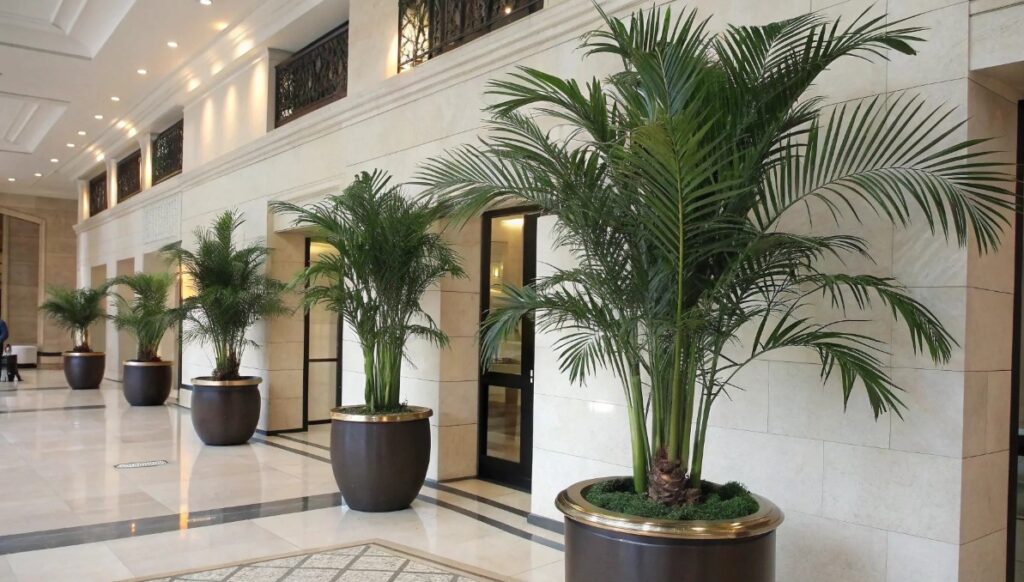
During a recent business trip, I noticed something that initially seemed insignificant, the stunning lobby plants at my boutique hotel looked absolutely perfect. Curious after years of observing struggling hotel plants, I touched a leaf and realized it was artificial.
That discovery led me down a rabbit hole ,revealing that the hospitality industry is quietly revolutionizing its approach to interior greenery, with major brands and independent properties alike making the switch.
The Living Plant Nightmare in Hotels
I’ve stayed in hundreds of hotels throughout my career, and I’ve observed a consistent pattern: lobby plants that look spectacular in photos but disappointing in person. Leaves showing brown edges, dropped foliage littering floors, uneven growth patterns, and that unmistakable look of plants barely surviving rather than thriving.
After consulting with several hotel general managers, I learned that living plants create operational headaches far exceeding their aesthetic contributions. Maintenance contracts cost thousands monthly, pest infestations spread from plants to guest rooms, water damage ruins expensive carpeting and furniture, and despite significant investment, plants often look mediocre anyway due to challenging interior conditions.
One property manager confided that their annual plant maintenance budget exceeded $40,000 for a 150-room property, and plants still consistently received negative mentions in guest reviews for looking unkempt or dying.
The Lighting Challenge
Hotel lobbies present particularly difficult environments for living plants. While they may feature impressive windows, interior areas where plants would create maximum aesthetic impact typically receive inadequate light. Deep corners, areas away from windows, and spaces blocked by architectural features simply cannot support photosynthesis requirements.
Property managers face impossible choices, place plants where they’d look best but will inevitably fail, or position them near windows where they’re less impactful but might survive. Neither option delivers the designed aesthetic that hospitality environments demand.
The Cost-Benefit Analysis That’s Changing Everything
Several major hotel brands have quietly commissioned studies comparing living versus artificial plant costs over five-year periods. The results shocked even skeptical operators:
Living plant five-year costs (150-room property):
- Monthly maintenance contracts: $150,000
- Plant replacements: $25,000
- Water damage repairs: $15,000
- Pest control related to plants: $8,000
- Total: $198,000
Premium artificial plant investment:
- Initial purchase: $45,000
- Minor maintenance (cleaning): $2,500
- Total: $47,500
The nearly 75% cost reduction represents just the beginning. Artificial plants eliminate operational headaches, reduce liability from water damage and pest issues, and most importantly, look consistently perfect, exactly what hospitality environments require.
Brand Consistency Across Properties
Hotel chains face unique challenges maintaining brand standards across multiple properties in different climates and locations. Living plants that thrive in Miami struggle in Chicago. Species available in California aren’t accessible in Texas. This variability makes consistent interior design nearly impossible.
Artificial plants solve this completely. Chains can specify exact plants, sizes, and arrangements that replicate perfectly across all properties regardless of location or climate. This consistency strengthens brand identity while simplifying operational protocols.
The Quality Transformation
Early artificial plants rightfully earned negative reputations in hospitality, obviously fake specimens that cheapened rather than enhanced spaces. Modern premium artificial plants bear no resemblance to those predecessors.
I’ve personally conducted informal tests showing high-quality artificial plants to hotel guests and watching their surprise when touching reveals they’re not real. The realism level now available makes artificial plants viable for luxury hospitality environments that would never have considered them previously.
Guest Perception and Expectations
Initially, hoteliers worried about guest reactions to artificial plants. Would they feel cheated? Would it signal cutting corners? Research and real-world implementation revealed the opposite: guests overwhelmingly prefer beautiful, pristine artificial plants over struggling, unkempt living ones.
Guest satisfaction surveys at properties making the switch showed improvements in ambiance ratings. Comments that previously mentioned “dying plants” or “brown leaves” disappeared completely, replaced by compliments about “beautiful greenery” and “lush, welcoming environment.”
Environmental Considerations
Sustainability-focused hotels initially hesitated, viewing artificial plants as environmentally problematic. However, comprehensive analysis revealed surprising conclusions:
Living hotel plants require enormous water consumption in already water-stressed areas. Chemical fertilizers and pesticides create runoff concerns. Constant plant transportation and replacement generate significant carbon footprints. Soil disposal creates waste streams.
Quality artificial plants manufactured durably and kept long-term actually present reasonable environmental profiles compared to the hidden costs of constantly maintaining and replacing living plants that inevitably fail in challenging hotel environments.
Operational Simplicity
Hotel staff face countless daily responsibilities. Eliminating plant care from their duties frees time for guest-facing services that actually impact satisfaction and loyalty. Front desk staff no longer field complaints about plant debris. Housekeeping doesn’t deal with water damage. Maintenance teams avoid pest issues spreading from plants.
This operational simplification represents significant value beyond direct cost savings. Staff focus their efforts on activities that genuinely differentiate hospitality experiences rather than fighting losing battles against botanical realities.
Seasonal Consistency
Resorts in seasonal destinations particularly benefit from artificial plants. Living plants require different care throughout the year, struggle during extreme seasonal conditions, and create maintenance challenges during slow seasons when staffing reduces.
Artificial plants maintain perfect appearance regardless of season, occupancy levels, or staffing situations. They look identical in July and January, during peak season and shoulder periods, whether housekeeping is fully staffed or operating lean.
The Luxury Segment Leads the Way
Surprisingly, ultra-luxury properties pioneered this transition. These hotels cannot accept anything less than perfection, yet living plants consistently failed to meet their standards despite enormous investment. When premium artificial options reached convincing quality levels, luxury properties adopted them quickly.
This top-down adoption pattern has accelerated acceptance throughout the industry. If five-star properties use artificial plants successfully, mid-tier brands feel confident following. The stigma has essentially evaporated at professional hospitality levels.
Implementation Best Practices
Successful hotels approach artificial plant implementation strategically:
- Gradual transition ─ Replace living plants as they decline rather than dramatic overnight changes
- Quality investment ─ Specify premium products rather than budget alternatives that would confirm negative stereotypes
- Professional installation ─ Work with designers who understand realistic placement and styling
- Regular cleaning ─ Establish maintenance protocols keeping plants looking fresh
- Strategic placement ─ Use artificial plants throughout while potentially keeping some living plants in optimal locations for guests who notice
The Future of Hotel Greenery
The hospitality industry’s quiet shift toward artificial greenery represents permanent change rather than temporary trend. As quality continues improving and more properties document success, adoption will accelerate. Within five years, artificial plants will likely become the default choice for hospitality environments, with living plants reserved for specific applications where they offer genuine advantages.
This revolution demonstrates how quality improvements can completely reverse perceptions. Artificial plants transformed from cheap substitutes into preferred solutions once realism levels met professional hospitality standards.